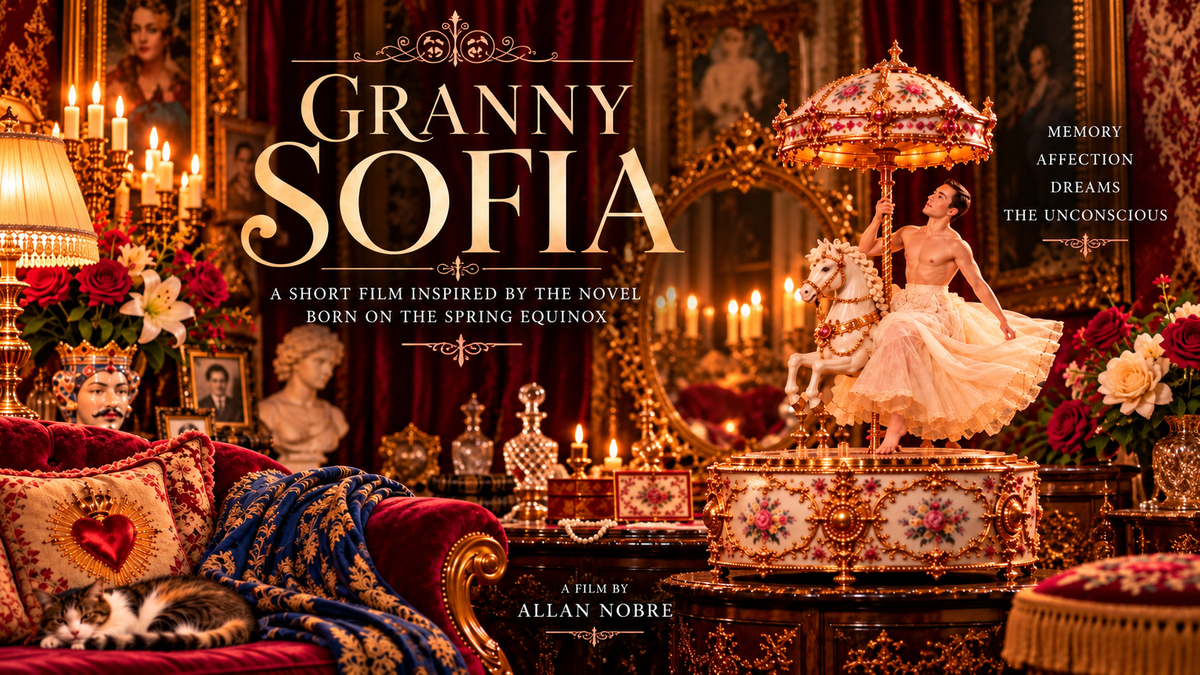
Childhood is perhaps the most surreal period of our existence. Before we learn to distinguish the possible from the impossible, the ordinary from the extraordinary, we inhabit a world in which objects possess personalities, rooms conceal mysteries, and the smallest gestures can acquire extraordinary significance.
Memory, however, is an unreliable storyteller. It rearranges events, embellishes details and transforms ordinary experiences into something resembling fiction. Perhaps this is why certain childhood recollections feel less like episodes from our past and more like scenes from a dream.
In Born on the Spring Equinox, Granny Sofia inhabits precisely this territory between reality and imagination. She is remembered through the eyes of little Angelo, whose fascination with her extends far beyond the affection traditionally associated with a grandmother.
Granny Sofia possesses an almost theatrical presence. Her violet-blue eyes, dark curls, colourful caftans and immaculate appearance transform everyday domestic life into a kind of private performance. The scent of lavender cologne mingles with fabric softener; heavy curtains frame rooms filled with familiar yet mysterious objects. To a child, such details are never insignificant. They become the architecture of memory.
The Extraordinary Within the Ordinary
One of the most intriguing aspects of childhood is our capacity to invest ordinary objects with extraordinary meaning. A music box is never merely a music box. Its miniature ballerina inhabits a world governed by mechanisms that remain invisible to the child. A porcelain figurine becomes a character, a mirror becomes a doorway, and the domestic interior transforms into a theatrical stage.
I have always been fascinated by these miniature universes, particularly the richly ornamented music boxes whose delicate movements seem to suspend time. There is something profoundly poetic about a ballerina condemned to repeat the same graceful movement whenever the mechanism is activated. Her existence is simultaneously beautiful and absurd: a miniature performance without beginning or conclusion, endlessly recreated for an audience that may or may not be watching.
In this sense, the music box becomes more than a decorative object. It becomes a metaphor for memory itself. We return to particular moments, replaying them with minor variations, attempting to recover something that can never be experienced in precisely the same way again.
Childhood, Gender and the Freedom to Imagine
Granny Sofia also represents a world in which Angelo can briefly explore aspects of himself that the wider world may not understand. In one episode, his fascination with her beautifully painted red toenails leads him to request the same treatment. Granny Sofia indulges his curiosity, although the nail polish must later be removed to avoid conflict with his mother. It is a seemingly insignificant domestic episode, yet one that raises larger questions about identity, gender and the social expectations imposed upon children. At what point does an innocent fascination with colour, beauty or ornamentation become subject to rules about masculinity and femininity?
Children do not necessarily approach such experiences through the categories constructed by adults. Their curiosity often precedes the language through which society eventually teaches them to interpret themselves. For Angelo, the desire to wear red nail polish is not necessarily a declaration of identity. It is an expression of fascination, affection and the wish to participate in the beautiful world represented by Granny Sofia. The distinction matters; Sometimes the most meaningful gestures of acceptance are also the smallest.
The Unconscious as a Theatre
The visual language of Granny Sofia draws upon my fascination with surrealism, theatricality and the unsettling poetry of childhood. The tactile dream worlds of Jan Švankmajer, particularly his interpretation of Alice, offer an important artistic reference. His cinema transforms familiar domestic objects into unpredictable presences, challenging the boundary between the animate and the inanimate.
For this short film, I wanted to approach childhood memory through a similarly theatrical sensibility, combining richly ornamented interiors, expressive colour and an atmosphere suspended somewhere between affection and unease. The intention was never to reproduce reality faithfully. Instead, I wanted to explore the emotional truth of recollection: the way a child’s imagination enlarges rooms, intensifies colours and gives ordinary objects an almost supernatural importance.
From Literature to Cinema
Granny Sofia forms part of my continuing exploration of the world of Born on the Spring Equinox through moving images.
Literature allows readers to construct their own imaginative landscapes. Cinema, by contrast, introduces a particular interpretation through composition, movement, colour, sound and rhythm. I am interested in the dialogue between these two forms of storytelling. The film does not attempt to illustrate every detail of the novel. Rather, it expands upon its emotional and symbolic atmosphere, inviting viewers into a world shaped by childhood perception.
Granny Sofia becomes more than a character. She represents affection, contradiction, beauty and the fragile freedom of childhood imagination. And the music box, with its endlessly revolving ballerina, becomes a reminder that memory is never entirely still. We revisit the past, but the past is also continually reinvented through the act of remembering. Perhaps that is why certain people never truly disappear from our inner worlds. They continue to inhabit the theatre of our unconscious, waiting for the music to begin again.
Granny Sofia — A Short Film
An original surrealist short film inspired by Born on the Spring Equinox, a novel by Allan Nobre.
Explore the novel Born on the Spring Equinox to discover more of Angelo’s world.
More from the Journal
Cinema & Short Films
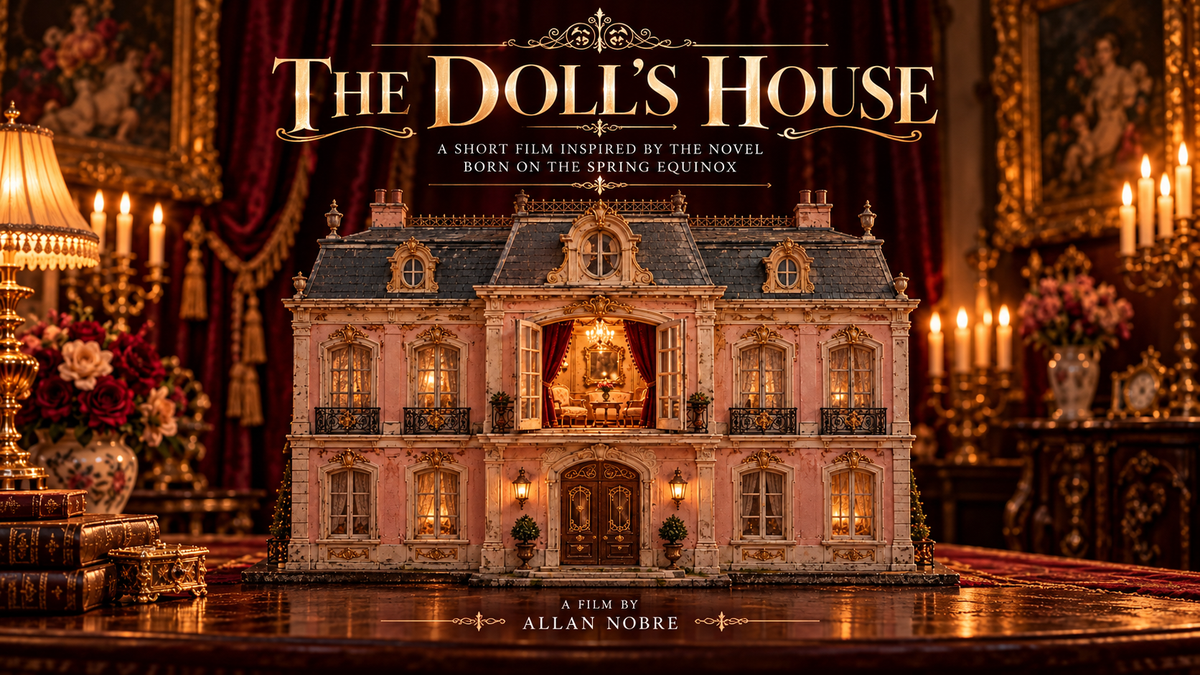
THE DOLL’S HOUSE
A short film inspired by Born on the Spring Equinox, on childhood, imagination and the quiet freedom to play.
Cinema & Short Films
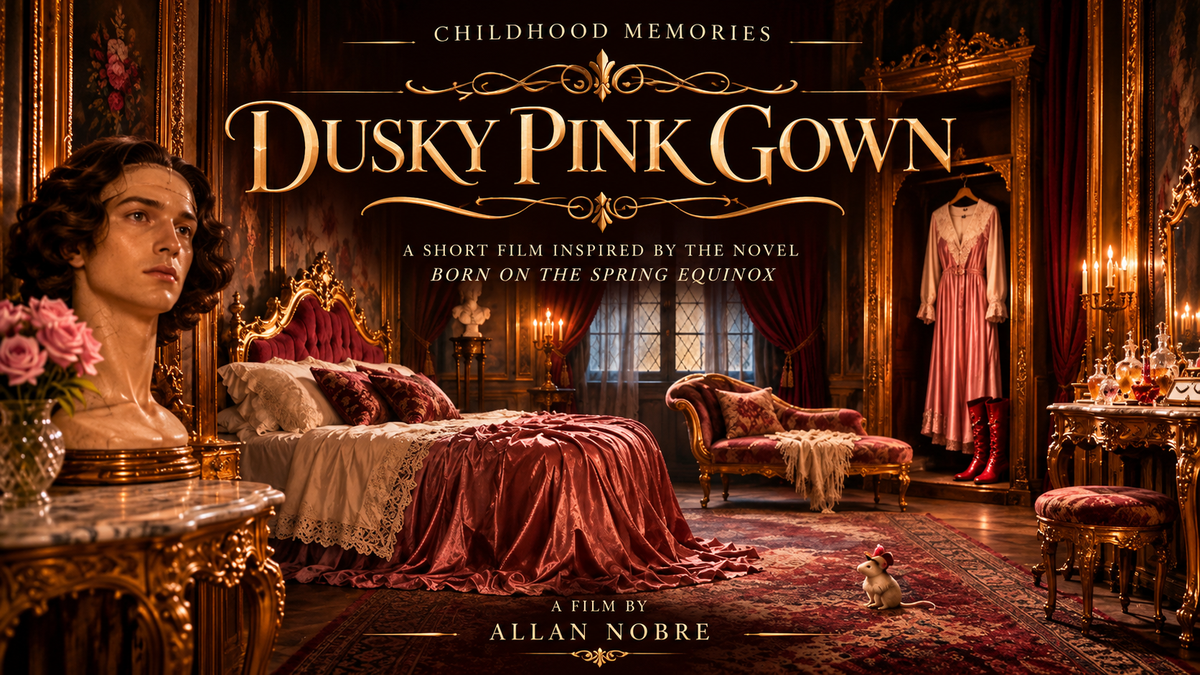
DUSKY PINK GOWN
A surrealist short film inspired by Born on the Spring Equinox, exploring childhood curiosity, identity and the unconscious through the mysterious beauty of a pink satin gown.
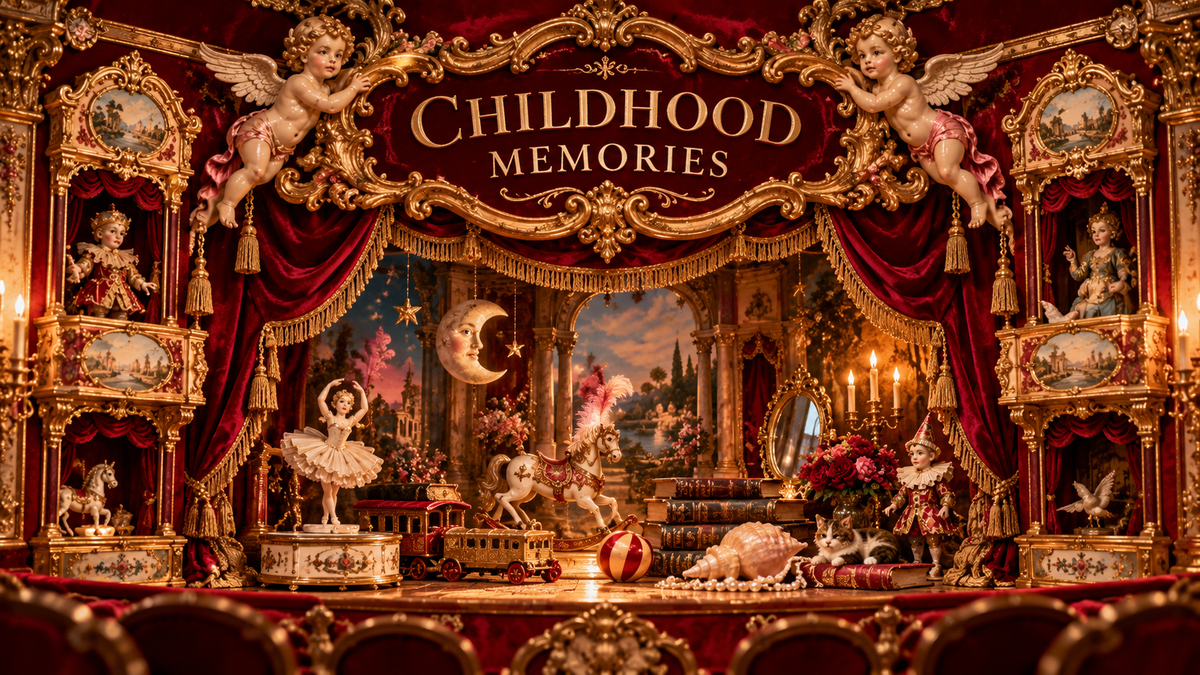
CHILDHOOD MEMORIES
A collection of surrealist short films inspired by Born on the Spring Equinox, exploring childhood, memory, imagination and the unconscious.