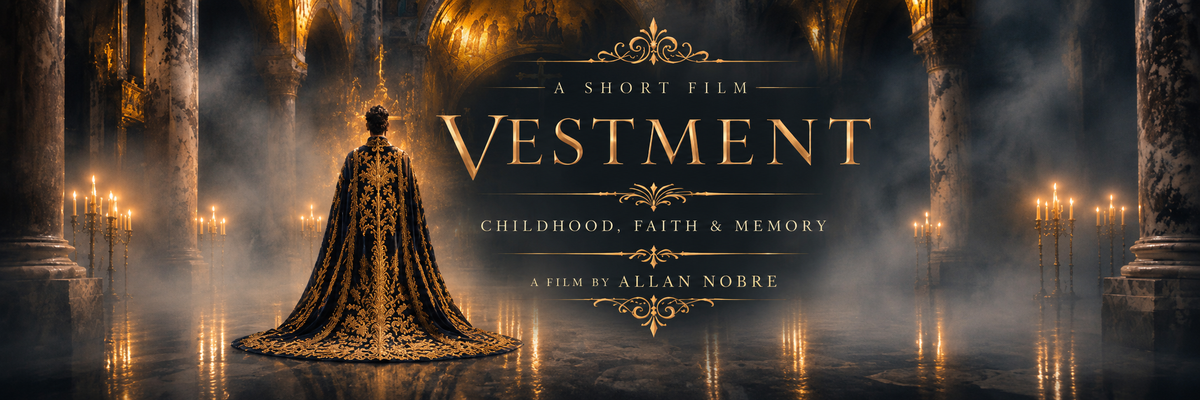
There was a time when the world appeared to be made of ceremonies. A candle was never merely a candle. A piece of embroidered fabric could transform an ordinary man into a mysterious figure standing between heaven and earth. The scent of incense, the silence of a church, the distant sound of a prayer — everything seemed to belong to an invisible language that children could understand long before they possessed the words to explain it.
Vestiment, a short cinematic interpretation inspired by my novel Born on the Spring Equinox, emerges from this territory between childhood memory and imagination. The film unfolds in an imaginary Venice, a city that exists less as a geographical location than as an architecture of the unconscious. Its canals, mist, churches and ancient buildings become fragments of an interior landscape, where memory is transformed into something resembling a dream. At its centre is a young boy, Angelo, whose fascination with Catholic ritual becomes an early encounter with beauty, identity and transformation.
The Church as Theatre
For a child, the distinction between religion and theatre is not always obvious. Both involve costumes, gestures, music, silence and the suspension of ordinary reality.
The priest enters wearing an elaborate vestment. His movements are deliberate, almost choreographed. Objects acquire symbolic significance. Words are repeated according to ancient traditions. Even the architecture seems designed to transport the individual beyond everyday existence.
I remember being fascinated by the beauty of Catholic ceremonies long before I could comprehend their theological meaning. The embroidered garments, the solemnity of the altar and the mysterious transformation of an ordinary man into a figure of spiritual authority seemed almost theatrical.
Looking back, I wonder whether this fascination belonged entirely to religion or whether it was also an early expression of my attraction to performance. Perhaps the church was one of my first theatres. And perhaps the priest was one of the first performers I encountered.
Yet the beauty of ritual does not necessarily diminish its spiritual significance. On the contrary, art and faith have shared a language for centuries, attempting to give visible form to what remains fundamentally invisible.
The Child and the Sacred
In Vestiment, Angelo experiences religion through images rather than doctrines. His understanding is intuitive, emotional and deeply imaginative.
The Virgin Mary is not simply a theological figure. She becomes an image of maternal tenderness, protection and mystery. The priest is not merely a representative of religious authority. He embodies transformation: a human being who, through clothing and ritual, appears to become something beyond himself.
Carl Jung regarded religious imagery as one of the ways in which profound psychological experiences acquire symbolic form. From a Jungian perspective, the sacred figures that populate childhood imagination may also become vessels for emotions and experiences that the developing mind cannot yet articulate.
The mother, the guardian, the mysterious authority figure — each may carry meanings extending beyond its immediate religious identity. In the film, these figures appear almost as fragments of a dream. They do not demand explanation. They simply exist, suspended between devotion and memory.
Venice: An Archaeology of the Soul
The Venice of Vestiment is deliberately imaginary. It is a city assembled from memories, ancestral associations, paintings, cinema and dreams. Its waters suggest the fluid nature of recollection. Its mist obscures the boundaries between what happened and what might have happened. Its churches contain images that seem simultaneously familiar and impossible.
Memory is rarely a faithful reconstruction of the past. We remember through emotion, and emotion continually rearranges the architecture of experience. A childhood room may become a palace. A familiar street may transform into a labyrinth. A religious ceremony may acquire the grandeur of an opera. This is the Venice I wanted to create. Not a documentary representation of the city, but a psychological landscape in which the past returns disguised as beauty. The water becomes a metaphor for the unconscious, while the buildings rise from it like fragments of forgotten dreams.
Playing at Becoming
The psychoanalyst Donald Winnicott understood play as an essential territory between internal imagination and external reality. It is within this intermediate space that children experiment with identities, transform objects and discover new possibilities of existence.
A child wearing a costume is not necessarily pretending in the superficial sense of the word. For a brief moment, the costume allows another reality to emerge. The same piece of fabric may become a royal mantle, a theatrical gown or a priest’s vestment. Through play, the child explores the extraordinary possibility of becoming someone else while remaining himself.
This relationship between clothing and transformation would later become central to my fascination with theatre, performance and identity. In Vestiment, the religious garment becomes more than an object of devotion. It is a symbol of metamorphosis. The child does not yet understand the philosophical implications of identity. He simply discovers that the visible world can be rearranged through imagination.
Between Faith and Existence
There is also a philosophical contradiction within this childhood fascination. The sacred promises transcendence, while existential philosophy asks us to confront the uncertainties of human existence. Søren Kierkegaard understood faith not merely as an intellectual conclusion, but as a deeply personal relationship with uncertainty, paradox and the unknown. His writings suggest that religious experience cannot be reduced to rational explanation.
Perhaps this is why childhood encounters with the sacred remain so powerful. They occur before the world has been divided into clearly defined categories of belief and disbelief. A child may experience wonder without needing to justify it. He may be fascinated by a religious image without understanding doctrine, or feel something approaching transcendence through music, silence and beauty. In adulthood, such experiences may become subjects of philosophical reflection. In childhood, they simply happen.
The Gesture of Blessing
One of the central images in Vestiment is the encounter between the child and the priest. The raised hand, the blessing and the elaborate vestment create a moment suspended between tenderness and mystery. The gesture suggests protection, but it also introduces the presence of authority. The priest becomes a figure through whom the child encounters something larger than himself. Yet within the dreamlike structure of the film, this encounter may also be interpreted as a meeting between different aspects of identity.
The adult and the child
The remembered self and the imagined self.
The person we once believed we might become and the person we eventually became.
The blessing, then, acquires another possible meaning.
It becomes a gesture of reconciliation with childhood.
Not an attempt to return to the past, but an acknowledgement that the child continues to exist somewhere within the adult imagination.
The Theatre of the Unconscious
Vestiment belongs to my continuing exploration of the relationship between autobiography, psychoanalysis and surrealist cinema. Like the other short films inspired by Born on the Spring Equinox, it does not attempt to reproduce the novel literally. Instead, it translates emotional memories into visual symbols.
The images are not presented as historical evidence, nor are they intended to resolve the ambiguities of childhood. They are invitations to enter a world in which memory behaves like theatre: a church becomes a stage; a priest becomes an apparition; a garment becomes an instrument of transformation; and a little boy wanders through a city that may never have existed, searching for something he cannot yet name.
Perhaps what he seeks is faith. Perhaps beauty. Perhaps simply the freedom to imagine another version of himself. Or perhaps, as so often happens in dreams, the question matters more than the answer.
VESTIMENT
VESTIMENT is part of an ongoing series of experimental short films inspired by my novel Born on the Spring Equinox, exploring childhood, identity, memory and the unconscious through cinematic storytelling.
More from the Journal
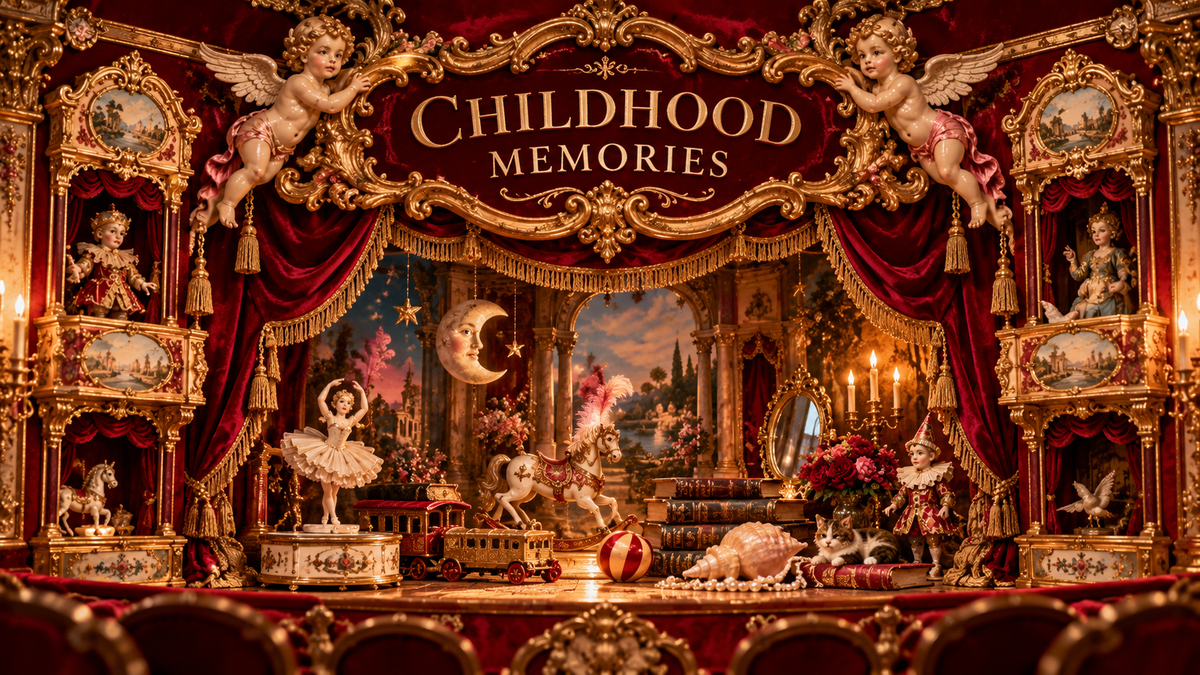
CHILDHOOD MEMORIES
A collection of surrealist short films inspired by Born on the Spring Equinox, exploring childhood, memory, imagination and the unconscious.
Cinema & Short Films
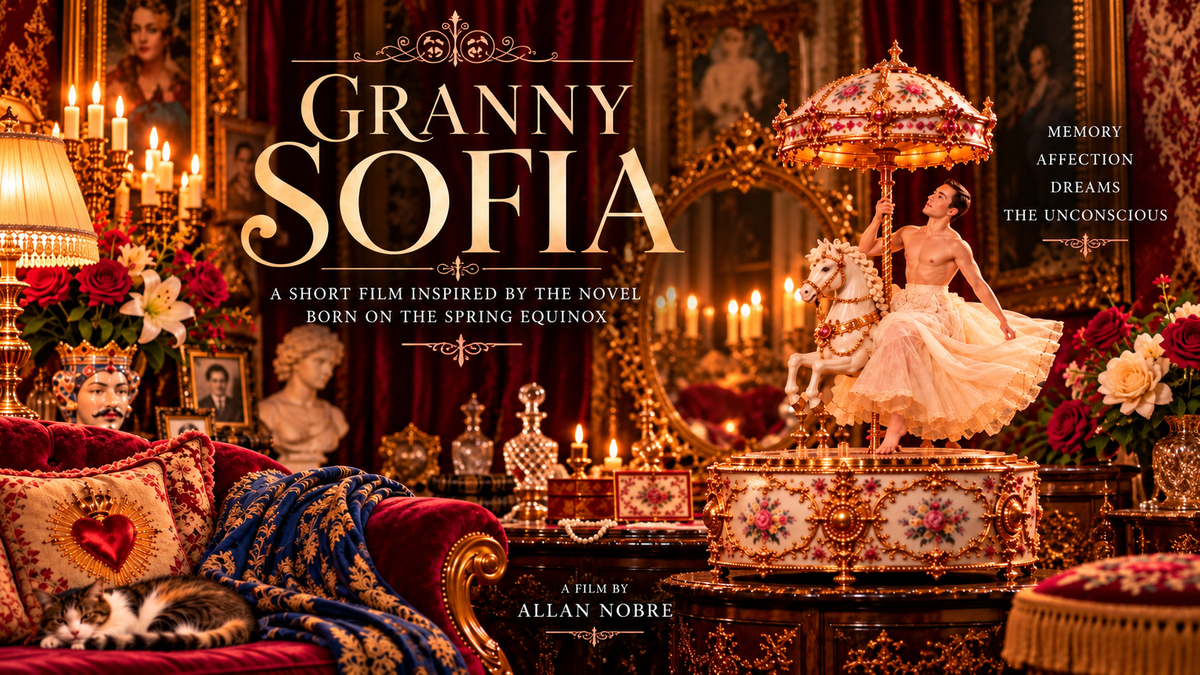
GRANNY SOPHIA
An original surrealist short film inspired by Born on the Spring Equinox, a novel by Allan Nobre.
Cinema & Short Films
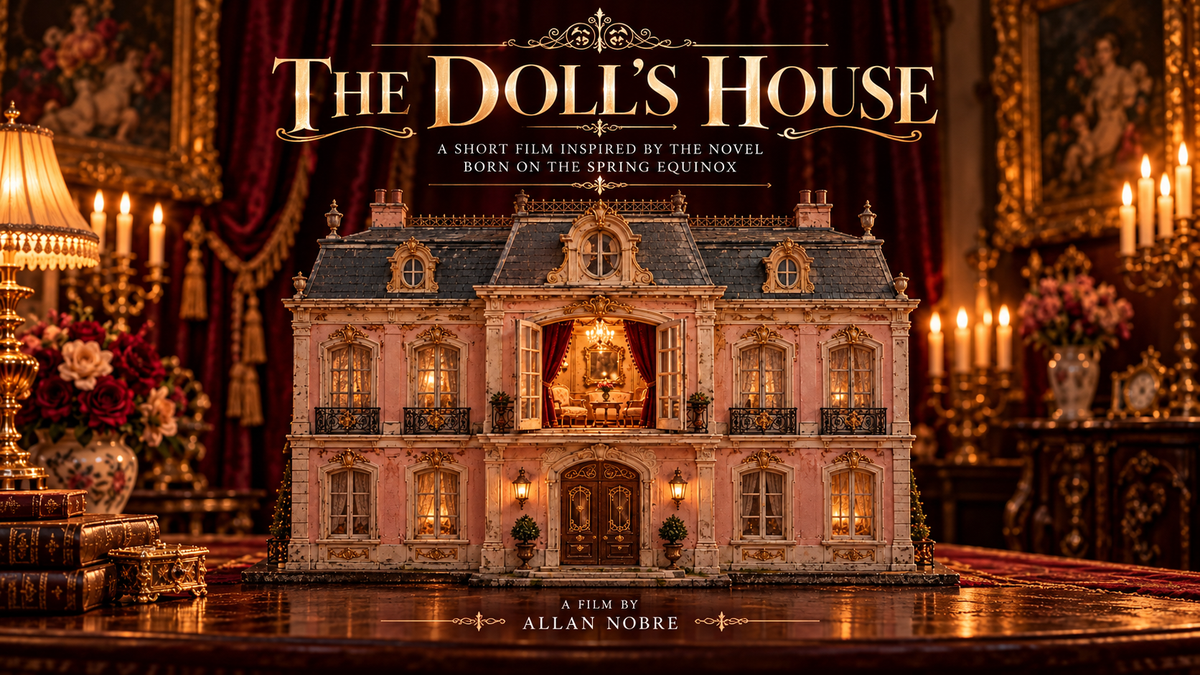
THE DOLL’S HOUSE
A short film inspired by Born on the Spring Equinox, on childhood, imagination and the quiet freedom to play.